







Choosing the right broker is one of the most important decisions every trader must make before entering the currency market. Many beginners open trading accounts without understanding how brokers operate or how their execution models affect spreads, speed, and trading results. However, correct broker selection requires knowledge of how intermediaries function in the Forex market and how different broker types manage client orders.
There are several types of Forex brokers, and each operates using a different execution structure. Some brokers create their own internal markets, while others connect traders directly to liquidity providers such as banks and institutions. These differences influence trading costs, order execution quality, and transparency. Understanding broker models helps traders avoid unnecessary risks and choose the best trading environment for their strategy. In this guide, you will learn how Forex brokers work, the differences between Market Maker, STP, and ECN brokers, and how to select the right broker type for your trading goals.
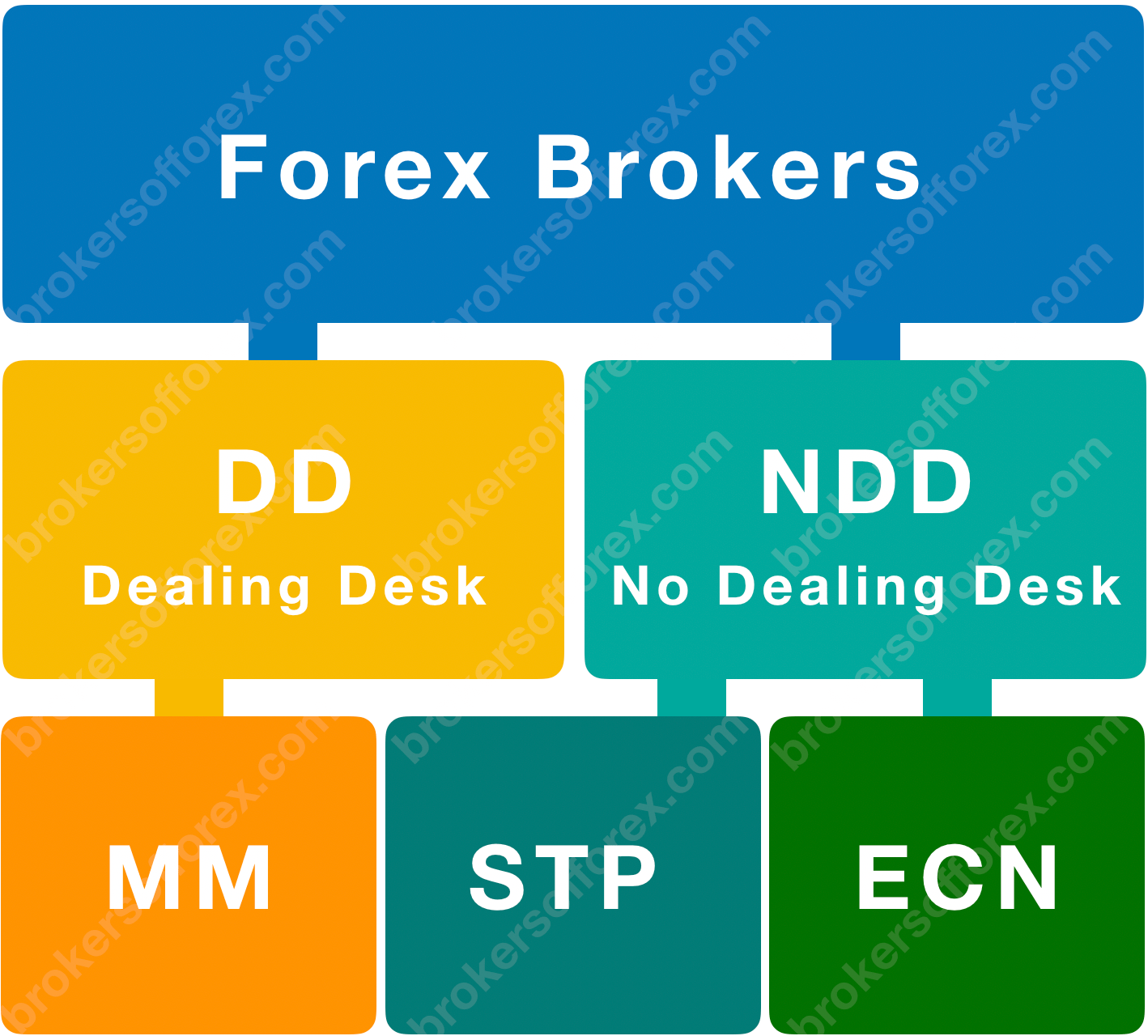
Understanding the Main Types of Forex Brokers
The diversity of brokerage services available today can be confusing, especially for beginners. On the Forex market, intermediaries generally operate under two main execution models:
- Dealing Desk brokers (Market Makers)
- No Dealing Desk brokers (STP and ECN brokers)
Understanding the difference between these broker categories is essential because it directly affects how your trades are executed and how prices are quoted.
Some brokers manage trades internally, while others pass them directly to external liquidity providers. This difference influences spreads, execution speed, leverage availability, and possible conflicts of interest between trader and broker.
Why Broker Type Matters for Traders
Broker structure determines how efficiently your trades reach the market. It also affects whether your broker acts as your trading counterparty or as an execution intermediary.
Key trading conditions influenced by broker type include:
- spread structure (fixed or variable)
- execution speed
- availability of requotes
- liquidity depth
- minimum deposit requirements
- leverage levels
- transparency of price feeds
Understanding these elements helps traders select a broker aligned with their trading strategy.
Market Maker Brokers (Dealing Desk Model)
Market Maker brokers, also known as Dealing Desk brokers, create their own internal trading environment that reflects the interbank currency market. Instead of sending client orders directly to external liquidity providers, they process trades within their own system.
In this model, traders often trade against the broker rather than against other global market participants.
How Market Maker Brokers Operate
Market Maker brokers generate price quotes based on interbank market data but execute trades inside their internal liquidity pool. This structure allows them to provide continuous liquidity regardless of market conditions.
One advantage of this system is that traders can execute orders even during periods of high volatility or major economic announcements.
Market Makers typically offer:
- fixed or stable spreads
- instant order execution
- high leverage availability
- low minimum deposit requirements
Because these brokers control execution internally, they can maintain stable trading conditions for beginner traders.
Advantages of Market Maker Brokers
Market Maker brokers remain the most popular choice among new Forex traders for several reasons.
They provide:
- simple account opening requirements
- stable spreads during normal market conditions
- easy order execution
- access to high leverage
- availability of micro-lot trading
These features make them suitable for traders starting with smaller capital.
Another benefit is price stability. Compared to direct market access brokers, spreads on Market Maker platforms usually fluctuate less dramatically during normal trading hours.
Limitations of the Market Maker Model
Despite their advantages, Market Maker brokers have certain limitations that traders should understand.
Since trades are executed internally, brokers may act as the counterparty to client positions. This creates a potential conflict of interest, although regulated brokers operate under strict supervision to ensure fairness.
Other possible disadvantages include:
- requotes during volatile conditions
- order execution delays in rare situations
- spread widening during major economic events
Still, Market Maker brokers remain an excellent starting point for beginner traders who want simple trading conditions.
No Dealing Desk Brokers: STP and ECN Execution Models
No Dealing Desk brokers operate differently from Market Makers. Instead of managing trades internally, they connect traders directly with liquidity providers such as banks, hedge funds, institutional investors, and other market participants.
This structure improves transparency and reduces conflicts of interest.
The two main No Dealing Desk broker types include:
- STP brokers
- ECN brokers
Both provide access to real market liquidity but operate slightly differently.
STP Forex Brokers (Straight Through Processing)
STP brokers route client orders directly to liquidity providers without passing them through an internal dealing desk.
These liquidity providers may include:
- banks
- financial institutions
- investment funds
- other brokers
STP platforms collect price quotes from multiple providers and select the most competitive price available at the moment of execution.
This system results in:
- fast order execution
- reduced requotes
- variable spreads
- greater transparency
Instead of charging fixed commissions, many STP brokers earn money by adding a small markup to spreads.
Because spreads depend on market liquidity, they may widen during periods of high volatility.
Who Should Use STP Brokers
STP brokers are often considered a balanced solution between beginner-friendly Market Maker brokers and professional-level ECN brokers.
They are suitable for traders who:
- want faster execution
- prefer market-based pricing
- trade medium-sized positions
- seek reduced broker intervention
Typically, STP accounts require slightly higher deposits than Market Maker accounts but lower deposits than ECN accounts.

ECN Forex Brokers (Electronic Communication Network)
ECN brokers provide direct access to a global network of liquidity providers and traders. In this model, orders are matched automatically inside a large electronic marketplace.
Unlike Market Makers, ECN brokers do not trade against clients.
Instead, they connect traders with:
- banks
- financial institutions
- professional traders
- hedge funds
- other retail traders
This creates one of the most transparent trading environments available in Forex trading.
How ECN Execution Works
ECN platforms display real-time market pricing collected from multiple liquidity sources. Traders receive raw spreads that can sometimes start from near zero.
Because spreads are very tight, ECN brokers usually charge commissions per trade instead of increasing spreads.
This model offers:
- very fast execution speed
- deep liquidity access
- transparent pricing
- reduced conflict of interest
However, ECN spreads can change rapidly depending on market volatility.
Limitations of ECN Brokers
Despite offering professional trading conditions, ECN brokers are not always ideal for beginners.
Typical limitations include:
- higher minimum deposit requirements
- commission-based pricing structure
- lower leverage compared to Market Makers
Additionally, during extremely low liquidity conditions, execution delays may occur.
Still, ECN brokers remain the preferred option for professional traders and scalpers.
Choosing Between STP and ECN Brokers
Many traders wonder whether STP or ECN brokers are better.
The answer depends on trading goals.
STP brokers provide easier access with lower deposits and simplified pricing structures.
ECN brokers provide institutional-level execution quality with tighter spreads and faster order matching.
Both models offer strong transparency compared to dealing desk brokers.
Summary of Types of Forex Brokers
Although most brokers today offer similar trading platforms, the real difference lies in execution quality, spreads, and transparency.
When selecting between types of Forex brokers, traders should focus on:
- execution reliability
- spread competitiveness
- absence of requotes
- liquidity access
- commission structure
Choosing the right broker type improves trading efficiency and supports long-term strategy performance.
Frequently Asked Questions (FAQ)
What are the main types of Forex brokers?
The main types of Forex brokers include Market Maker (Dealing Desk), STP (Straight Through Processing), and ECN (Electronic Communication Network) brokers. Market Makers create an internal trading environment, while STP and ECN brokers provide access to external liquidity providers such as banks and institutions. Some brokers also use hybrid execution models that combine multiple systems.
Which Forex broker type is best for beginners?
Market Maker brokers are usually the best choice for beginners because they offer lower minimum deposits, stable spreads, and simple trading conditions. They also provide higher leverage and allow traders to start with smaller account balances compared to ECN brokers.
What is the difference between STP and ECN brokers?
STP brokers route client orders directly to liquidity providers and typically earn through spread markups. ECN brokers connect traders to a global electronic network where orders are matched automatically between participants. ECN brokers usually offer tighter spreads but charge commissions per trade.
Do ECN brokers charge commissions?
Yes. Most ECN brokers charge commissions instead of increasing spreads. This allows traders to access raw market spreads, which are often lower than those offered by Market Maker brokers.
Are Market Maker brokers safe to use?
Market Maker brokers can be safe if they are properly regulated by recognized financial authorities. Regulation ensures transparency, protection of client funds, and fair execution standards. Traders should always check a broker’s regulatory status before opening an account.
Can a broker use both Market Maker and ECN execution?
Yes. Many modern brokers operate hybrid execution models. Depending on account type, trade size, or market conditions, they may use Market Maker, STP, or ECN routing systems.
Why do spreads differ between broker types?
Spreads differ because each broker model handles liquidity differently. Market Makers create internal spreads, STP brokers add markups from liquidity providers, and ECN brokers provide raw spreads directly from the market and charge commissions separately.
Which broker type offers the fastest execution speed?
ECN brokers usually provide the fastest execution speed because they connect traders directly to multiple liquidity providers through electronic networks without dealing desk intervention.
Do all Forex brokers offer the same leverage?
No. Market Maker brokers usually offer higher leverage levels compared to ECN brokers. ECN accounts often have lower leverage because they operate closer to institutional market conditions.
How can I choose the right Forex broker type for my strategy?
Choosing the right broker depends on your trading experience, strategy, account size, and risk tolerance. Beginners often prefer Market Maker brokers, while experienced traders usually select STP or ECN brokers for better pricing transparency and execution quality.
Updated: 2026