







A currency pair can move sharply in a matter of seconds, even when the chart looked quiet just moments earlier. Often, the explanation is not another technical indicator or a sudden change in market sentiment. It is an economic announcement that traders were waiting for — or one they did not expect to matter quite so much.
Learning how to read a Forex economic calendar helps traders understand when important economic data will be released, which currencies may be affected and what the published figures actually mean. It is also a practical part of planning a trading session, especially when dealing with inflation reports, employment figures and central bank decisions.
A calendar cannot predict the next market move. What it can do is provide context, highlight scheduled risks and help you avoid making decisions without knowing what is about to happen.

What Is a Forex Economic Calendar?
A Forex economic calendar is a schedule of upcoming economic releases, central bank announcements and other events that may influence financial markets. Most calendars include the release time, the country or currency involved, the name of the event, its estimated importance and a set of economic figures.
Depending on the provider, a calendar may also display previous results, market forecasts, actual figures, revised historical data and links to additional information about each indicator.
For currency traders, the main purpose is straightforward: to understand when new information about an economy will become available and why it might matter for a particular currency pair.
Consider EUR/USD. A major US inflation release may affect expectations about Federal Reserve policy and, in turn, the US dollar. European inflation figures can influence expectations about the European Central Bank. Because EUR/USD reflects the relative value of the euro against the dollar, changes in expectations for either economy can affect the pair.
If you are still learning how currencies are quoted, start with our guide to what a currency pair is and how it works.
How to Read a Forex Economic Calendar
At first glance, a calendar can look like a wall of abbreviations and numbers. Fortunately, most entries follow a similar structure. Once you understand the main columns, it becomes much easier to separate useful information from background noise.
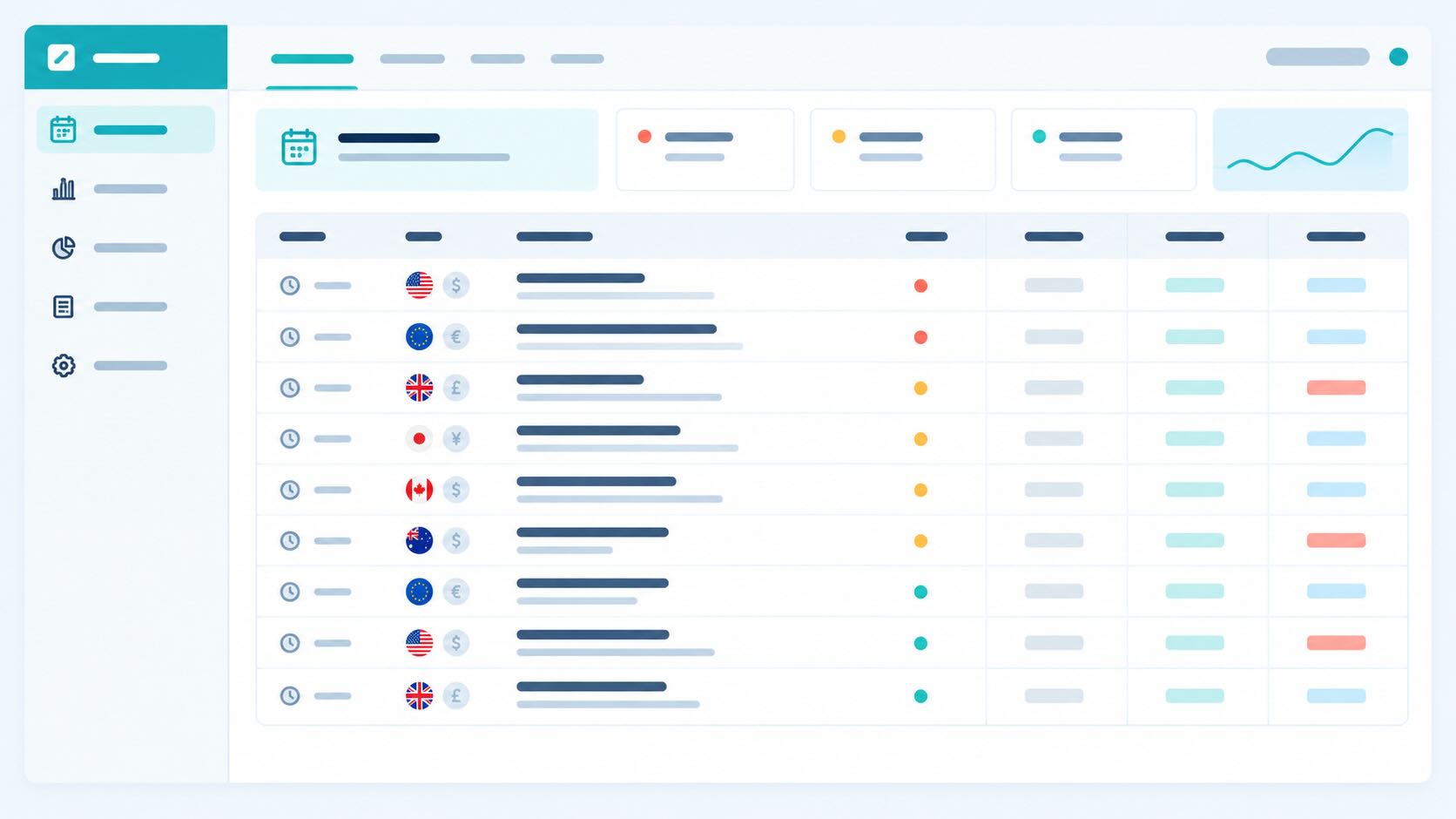
1. Time and date
The time indicates when an event is scheduled to take place. This is one of the first details to check, since being an hour early or late can make a real difference around a major release.
Many calendar providers allow you to select a time zone. Confirm that the setting matches your location or trading platform. Daylight saving time can also cause temporary differences between regions, and release times or schedules may occasionally change.
Do not assume that a time shown in one economic calendar will automatically match the clock on your trading terminal. Check the settings before relying on it.
2. Currency or country
This field identifies the economy associated with the announcement. A US inflation report primarily concerns the US dollar, while an interest rate decision from the Bank of England is directly relevant to the British pound.
The relationship is not exclusive, though. Major releases can affect several currencies when they change broader expectations for interest rates, global growth or demand for safe-haven assets.
When reviewing a calendar, focus on the currencies connected to the pairs you follow. If you mainly trade EUR/USD, for example, US and euro area events deserve particular attention. Events elsewhere may still matter, but they are not all equally relevant to your immediate trading plan.
3. Event name and reporting period
The event name tells you what is being measured or announced. Common examples include the Consumer Price Index (CPI), Gross Domestic Product (GDP), employment reports, retail sales and purchasing managers’ indexes (PMI).
Pay attention to the period and measurement attached to the figure. Monthly inflation, annual inflation, quarter-on-quarter GDP growth and year-on-year GDP growth are not interchangeable. Even two entries carrying the same broad label can describe different measures of economic activity.
For example, a headline inflation figure and a core inflation figure may tell different stories. The headline measure includes the full basket of goods and services, while a core measure excludes certain volatile components according to the relevant statistical methodology. Always confirm which series the calendar is displaying.
4. Impact or importance
Many calendars classify events as low, medium or high impact. These labels help traders prioritise the schedule without reading every announcement in equal detail.
A high-impact label generally means that an event has the potential to influence market prices significantly. Interest rate decisions, inflation data and major employment reports often receive this classification.
However, the label is a guide, not a forecast. A high-impact event may produce a surprisingly muted reaction when the result is close to expectations. A medium-impact release can occasionally generate a sharp move if the numbers contain an unexpected development.
Impact ratings are usually assigned by the calendar provider. They are not official predictions issued by a central bank or statistical agency.
5. Previous
The previous figure is the result of the last reporting period. It gives you a reference point for judging whether an economic indicator is improving, weakening or remaining broadly stable.
There is one important detail: the previous figure can be revised. Employment and GDP data, for instance, may be updated as additional information becomes available. A calendar might therefore display a revised previous result rather than the number traders originally saw.
That revision can matter. A new employment report may appear stronger than expected, but a substantial downward revision to earlier months could change the broader interpretation. Read the entire release instead of concentrating on one headline number.
6. Forecast
The forecast represents the market expectation for an upcoming release. Depending on the calendar and data provider, it may reflect a consensus of economists’ estimates or another published estimate.
A forecast is not the official result, nor is it a promise about what will happen. It represents what market participants expect before the announcement.
This distinction is central to interpreting news. Prices often move in response to the difference between the expected outcome and the newly published information, rather than simply reacting to whether a number looks high or low in isolation.
7. Actual
Actual is the figure published when the data becomes available. Comparing actual with forecast shows whether the result came in above, below or close to the expected level.
Some calendars use colours or symbols to highlight this difference. These visual signals are convenient, but they do not tell you automatically whether a currency should rise or fall. To interpret the result, you need to understand what the indicator measures and how it relates to monetary policy and market expectations.
| Calendar field | What it tells you | What to check |
|---|---|---|
| Time | When the event is scheduled | Time zone and any schedule changes |
| Currency | Which economy the event concerns | Whether it relates to the currency pair you follow |
| Impact | The provider’s assessment of event importance | Potential volatility, not a predicted direction |
| Previous | The earlier reported figure | Whether the value has been revised |
| Forecast | What was expected before the release | The consensus and the exact measure being forecast |
| Actual | The newly published result | The difference from expectations and the wider context |
Which Economic Events Matter Most in Forex?
Not every economic announcement deserves the same amount of attention. For most currency traders, a handful of event categories are a sensible starting point.
Central bank interest rate decisions
Central banks influence monetary conditions partly through interest rates and their communication about future policy. Their decisions can change expectations about the relative returns available from holding different currencies.
Watch the decision itself, the accompanying statement, any updated economic projections and the press conference when one is scheduled. The published rate may attract the headlines, but the explanation behind the decision can be just as important.
For US monetary policy, the Federal Reserve’s official FOMC calendar provides meeting dates and links to statements and minutes.
Inflation reports
Inflation data helps markets assess changes in the cost of living and the potential direction of monetary policy. The CPI is widely followed, although the precise measure varies by country.
Traders may look at headline inflation, core inflation, month-on-month changes and annual changes. A result can look different depending on which measure is being compared with expectations.
Also remember that one inflation report rarely determines the full policy outlook by itself. Central banks usually consider several indicators, and the market may already have anticipated much of the published result.
Employment and wage data
Employment figures provide information about labour market conditions. Depending on the country, important releases may cover payrolls, unemployment, participation rates, wages or job vacancies.
In the United States, the monthly Employment Situation report is closely watched. The US Bureau of Labor Statistics release schedule lists its planned publication dates.
Strong job creation can support expectations for economic activity, but it does not automatically mean that a currency will appreciate. Wage growth, revisions, unemployment and the likely response from the central bank can all influence the interpretation.
GDP, business surveys and retail sales
GDP estimates describe changes in total economic output. Retail sales provide information about consumer spending, while surveys such as purchasing managers’ indexes offer a view of business activity and expectations.
These releases help traders assess whether an economy is expanding or losing momentum. Their significance depends on the broader picture: the same GDP figure can be interpreted differently when inflation is falling than when prices are rising rapidly.
Central bank minutes and speeches
A scheduled speech or the publication of meeting minutes may provide clues about how policymakers view inflation, growth and future interest rates. Markets can react to a change in tone even when no new official rate is announced.
Keep in mind that a speech may cover several topics and that individual remarks should not be treated as a definite commitment to a specific policy decision.
Actual vs Forecast: Why the Difference Matters
One of the most useful habits in economic calendar analysis is to compare the actual figure with the forecast before deciding what the result might mean.
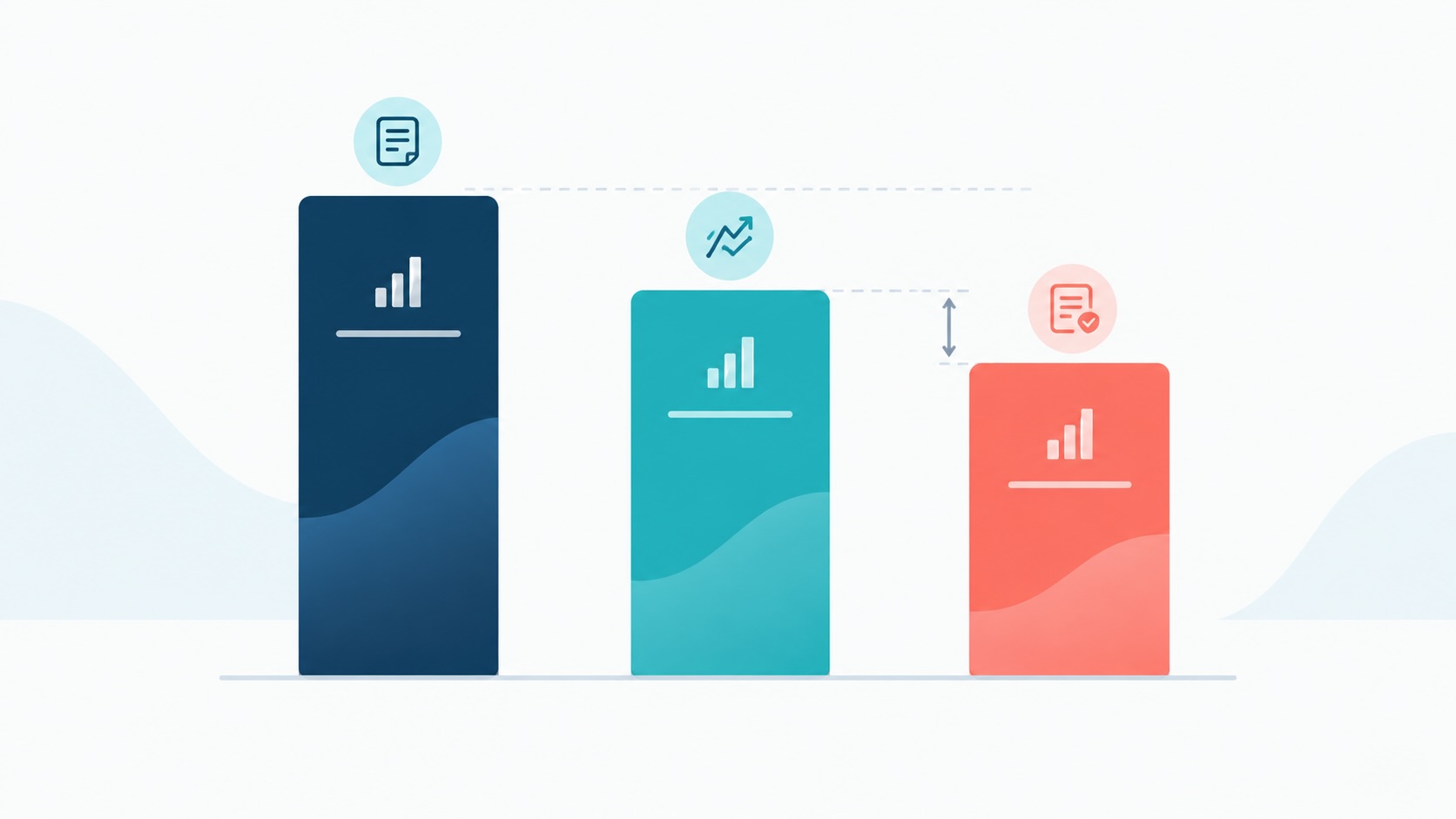
Imagine that a fictional US inflation report shows the following figures:
| Measure | Illustrative result |
|---|---|
| Previous annual inflation | 3.5% |
| Forecast annual inflation | 3.4% |
| Actual annual inflation | 3.2% |
These figures are invented for educational purposes. They are not a real economic release.
In this example, annual inflation has slowed from the previous reading and has come in below the forecast. Depending on the wider economic context, traders might interpret the result as reducing pressure on the Federal Reserve to keep monetary policy restrictive.
If expectations for US interest rates then move lower relative to expectations for other economies, the dollar could come under pressure. However, that is only one possible interpretation, not a trading signal.
The market may have expected an even lower figure. Core inflation might be stronger than headline inflation. Previous values could have been revised, or the central bank might remain concerned about persistent price pressures. Any of these factors could change the response.
Now reverse the example. If actual inflation is higher than expected, that may strengthen expectations for tighter monetary policy, potentially supporting the currency. But even here, the reaction depends on how the result compares with what was already priced into the market.
Why a good number can lead to a currency falling
Economic indicators are not graded on a simple good-or-bad scale. Markets trade expectations about the future, not just the condition of the economy today.
Suppose a jobs report is stronger than expected. Traders may initially see that as positive for the economy. Yet if they had expected an even stronger figure, or if wage growth and previous readings disappoint, the overall release could be viewed less favourably.
Positioning also matters. When a large part of the market has already bought a currency in anticipation of a strong report, the actual announcement may offer little reason for further buying. Some participants may even close positions after the news.
This is why it helps to ask three questions rather than just one:
- Was the actual result above or below the forecast?
- What do the detailed figures and any revisions say?
- How might the release change expectations for future monetary policy or economic growth?
How Economic News Affects Currency Prices
Economic announcements can influence currency prices through several channels. Interest rate expectations are an important one, but they are not the only factor.
A release can change expectations about inflation, economic growth, central bank policy or the relative strength of two economies. In periods of uncertainty, it can also influence demand for currencies perceived as relatively defensive or liquid.
Consider EUR/USD. If new US data changes expectations for Federal Reserve policy while euro area expectations remain relatively stable, the difference between expected policy paths may shift. The pair can react as traders reassess the relative outlook for the dollar and the euro.
That does not mean the pair must move in one particular direction. Both economies can produce important news on the same day, and broader market conditions may outweigh the effect of a single release.
It is also worth separating the direction of a price move from the quality of a trade. A trader may correctly anticipate the broad reaction but still enter at an unfavourable price or face a sharp reversal. The timing and execution of a position matter, too.
Understanding long and short positions in Forex can help clarify how a trader’s result depends on the direction of the pair’s movement. For a wider foundation, read our introduction to Forex and Forex trading.
How to Use an Economic Calendar Before Trading
You do not need to follow every release in every country. A consistent routine is more useful than an overloaded calendar that you barely have time to read.
1. Review the week ahead
At the beginning of the week, scan the schedule for major central bank decisions, inflation reports and employment releases relevant to the currencies you follow. Note the times and check whether several important events fall close together.
This broad review helps you identify sessions that may require extra preparation. It can also reveal when the market is likely to have fewer major scheduled catalysts, although unexpected news can still occur.
2. Check the calendar before your trading session
Before opening a position, review the events scheduled for the coming hours. Pay attention to announcements involving either currency in your selected pair.
If you trade several markets, narrow the calendar to the currencies and regions that matter to your plan. Filtering the schedule makes it easier to spot relevant releases without getting lost in unrelated information.
3. Understand what the event measures
Before interpreting a forecast, read the event description. Confirm whether it is a monthly or annual measure, which reporting period it covers and whether the figure is seasonally adjusted if that distinction applies.
This extra step avoids a common mistake: comparing figures that use different measurement periods or assuming that a higher number is automatically positive for the currency.
4. Decide how the announcement affects your existing plan
There is a difference between using news to understand market conditions and trying to predict every move immediately after a release.
Consider whether an upcoming announcement changes the rationale for a position you already hold. Review your planned exit, position size and exposure before the event, rather than waiting until the price begins moving quickly.
If the announcement makes market conditions too uncertain for your strategy, remaining out of the market is also a possible decision. A calendar is useful partly because it tells you when you may prefer not to trade.
5. Review the reaction after publication
Once the figures have been released, compare actual with forecast and check for revisions. Then observe whether the market response appears consistent with the initial interpretation or whether prices are moving in a different direction.
A first price spike may fade as traders digest the details. In other cases, the move may continue as expectations are repriced. There is no fixed pattern that applies to every release.
Reviewing the outcome afterwards can help you build a record of how different types of news affect the currency pairs you follow.

Risks of Trading Around Economic News
Economic releases can create opportunities, but they also introduce practical risks that a calendar alone cannot remove.
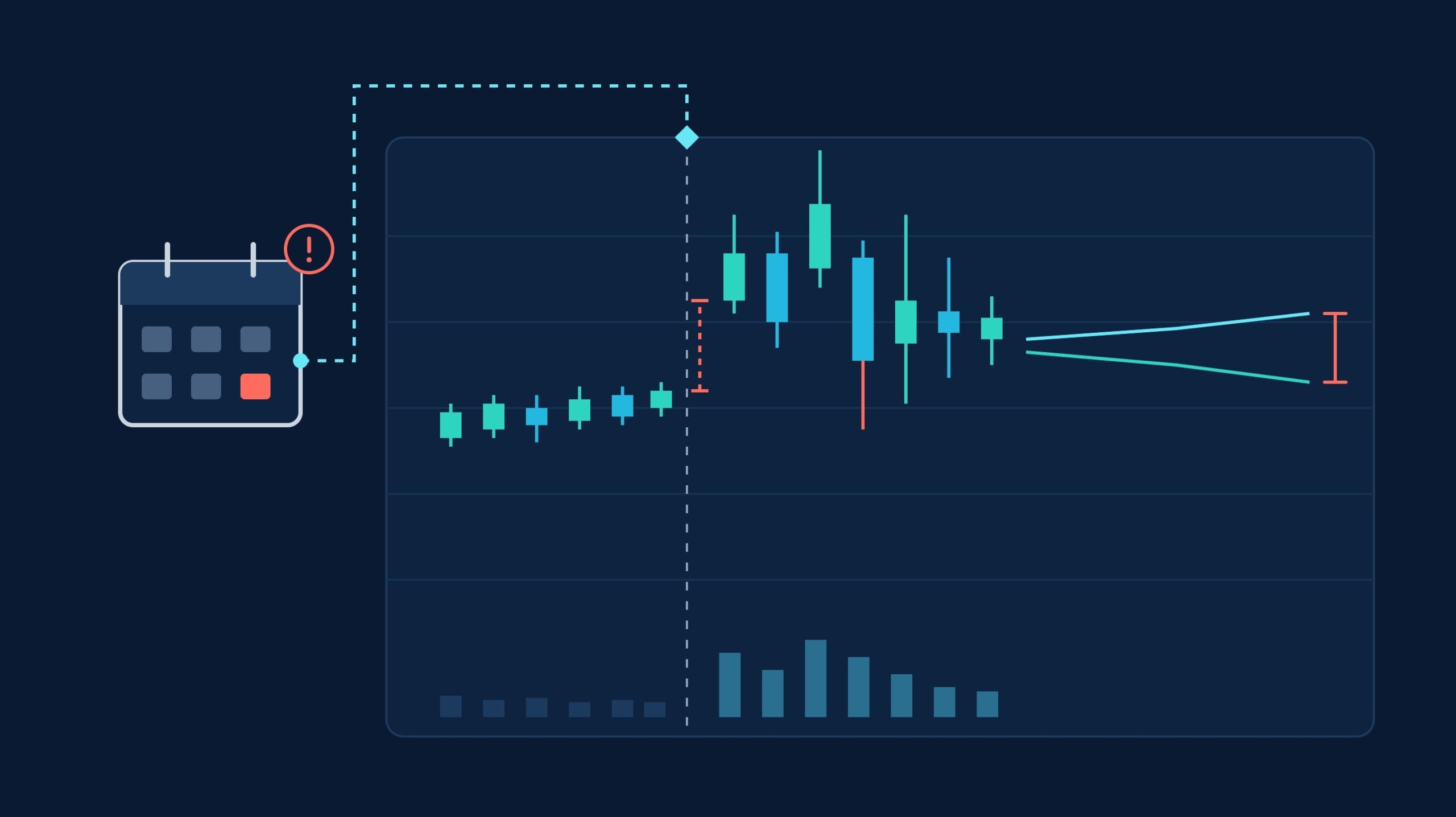
Wider spreads
Bid-ask spreads may widen around important announcements, particularly when liquidity becomes less available or prices are changing quickly. A trade can therefore become more expensive to open or close than it would be during quieter conditions.
Slippage and fast price movements
Slippage occurs when an order is executed at a different price from the one expected. Around major announcements, prices may move rapidly between available quotes. A stop-loss order does not guarantee that an exit will occur at the exact stop price, especially when the market gaps or liquidity is limited.
False starts and reversals
The initial reaction is not always the final direction. Traders may respond first to the headline figure and then reconsider when additional details or revisions become available.
Entering immediately because the actual figure appears better or worse than expected can therefore expose a position to sharp reversals. The fact that an announcement is important does not make its outcome easier to predict.
Excessive leverage
Fast-moving markets can magnify the consequences of poor position sizing. A relatively small price change can cause a substantial account loss when exposure is too large.
Review our guide to Forex risk management strategies for a broader discussion of position sizing, stop-loss planning and managing exposure. Our explanation of leverage in Forex also explains why the amount of exposure matters more than the headline leverage ratio alone.
If you are still learning how your platform handles orders, a Forex demo account can help you observe market behaviour and practise using platform features without placing your personal funds at risk. Demo results do not guarantee that live execution will be identical.
Common Economic Calendar Mistakes
Assuming that high impact means a large price move
An impact label highlights an event’s potential importance; it cannot tell you how much a pair will move or which direction it will take. Actual market conditions and expectations still matter.
Looking only at the actual number
Actual data needs to be compared with the forecast, the previous result and the relevant economic context. A figure that looks strong in isolation may still disappoint the market.
Ignoring revisions
Revised historical numbers can change the interpretation of a new release. Check whether a previous reading has been updated before drawing conclusions from the latest headline.
Forgetting the other currency in the pair
A currency pair always compares two currencies. Even if a US announcement supports the dollar, EUR/USD may not fall if news from the euro area supports the euro at the same time, or if the dollar-related information was already fully priced in.
Using the calendar as an automatic trading signal
A calendar tells you about scheduled information. It does not provide a complete trading strategy, guarantee an outcome or replace risk management. A disciplined decision requires more than a coloured impact label and a difference between two numbers.
Checking the time only once
Calendar schedules can change, and time-zone settings can be wrong. Verify important releases before the relevant session rather than relying on an old screenshot or a note made several days earlier.
Forex Economic Calendar Checklist
Before trading around an important announcement, use this short checklist:
- Confirm the release date and time in the correct time zone.
- Identify the currencies and positions that may be affected.
- Read the event name and confirm the reporting period.
- Review the previous result and the market forecast.
- Check whether the previous figure has been revised.
- Consider how the release could affect your existing trading plan.
- Review your position size, stop-loss settings and total exposure.
- Remember that spreads and slippage may increase around major news.
- After the release, compare actual with forecast and review the market response.
You do not have to trade every announcement. Sometimes the best use of the calendar is simply to know when to be more cautious.
Frequently Asked Questions About the Forex Economic Calendar
What is a Forex economic calendar?
A Forex economic calendar lists scheduled economic releases, central bank decisions and other events that may influence currency prices. It commonly includes the release time, currency, event name, importance rating, previous result, forecast and actual figure.
What is the difference between actual, forecast and previous?
Actual is the newly published result, forecast is the market expectation before the announcement, and previous is the earlier reported result. Comparing the three helps traders understand whether the latest data differs from expectations and how the indicator has changed.
Which economic events are most important for Forex traders?
Commonly watched events include central bank interest rate decisions, inflation reports, employment data, GDP releases and business activity surveys. Their importance depends on the currencies being traded, current market expectations and the wider economic context.
Does higher-than-expected economic data always strengthen a currency?
No. The effect depends on the indicator, the direction of monetary policy expectations, other figures in the release and what the market had already priced in. Stronger-than-expected data may support a currency in some circumstances but does not guarantee that its price will rise.
How often should I check an economic calendar?
Review the coming week to identify important events, then check the schedule again before your trading session. If you hold positions across several sessions, monitor events relevant to both currencies in your pair and review any schedule updates.
Can I trade Forex using only an economic calendar?
An economic calendar is an information and planning tool, not a complete trading system. It does not guarantee the direction of price movements and should not replace a trading plan, appropriate position sizing or risk management.
Why can spreads widen during economic announcements?
Market conditions may change rapidly around a major release, and the prices available from liquidity providers can become less favourable. Brokers may consequently display wider bid-ask spreads. Actual conditions vary by broker, instrument, account type and market circumstances.
Where can I find reliable economic release dates?
A reputable economic calendar can help you monitor multiple events in one place. For important announcements, it is also useful to consult the organisation responsible for the release. For example, the US Bureau of Labor Statistics publishes its employment report schedule, while the Federal Reserve publishes its FOMC meeting calendar.
Final Thoughts
Learning how to read a Forex economic calendar is less about memorising dozens of economic abbreviations and more about understanding the information behind each announcement. Start with the release time, the currency involved, the forecast and the actual result. Then consider revisions, monetary policy expectations and the wider market context.
Most importantly, do not confuse information with certainty. A calendar can help you prepare for volatility, recognise potential risks and make better-informed decisions, but it cannot tell you exactly where the market will go next.
Forex and CFD trading with leverage carries a high risk of loss and may not be suitable for every trader. This article is for educational purposes only and does not constitute investment advice.