
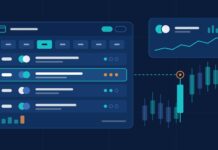






A forex demo account is one of the most useful tools for anyone learning how to trade currencies. It allows beginners to practice trading with virtual money while experiencing many of the features available on a live trading account. A demo account can also help experienced traders test new strategies, platforms and trading tools before using them with real capital. While demo trading cannot reproduce every aspect of live trading, it provides a practical way to gain experience and understand the risks involved in forex trading.

What Is a Forex Demo Account?
A forex demo account is a simulated trading account that uses virtual funds instead of real money. It is designed to reproduce the trading environment of a live account, usually providing access to currency pairs, charts, indicators and different order types.
For example, a trader can use a demo account to practice trading EUR/USD or GBP/JPY without risking their own money. The account allows traders to open and close positions, test stop loss and take profit orders and monitor how price movements affect their trades.
Demo accounts are mainly designed for education and practice, but they can also be useful for experienced traders who want to test a new approach.
Why Use a Demo Account for Forex Trading?
Learn How Forex Trading Works
Forex trading involves more than predicting whether a currency pair will rise or fall. Traders need to understand spreads, leverage, margin, position sizes and order types.
A demo account lets beginners learn these concepts through practical experience. Instead of simply reading about market orders or stop loss levels, they can see how these tools work while trading in a simulated environment.
This can make the transition to live trading easier and reduce basic mistakes caused by unfamiliarity with the platform.
Practice Forex Strategies Without Financial Risk
One of the main advantages of demo trading is that mistakes do not result in real financial losses. Traders can test technical analysis methods, price action strategies, indicators or other approaches using virtual funds.
A good way to use a demo account is to follow a specific trading plan and record the results. A trading journal can help identify which setups work well, where mistakes occur and whether the trader is actually following their rules.
The objective should not be to make the largest possible virtual profit. Instead, demo trading should be used to develop a consistent and repeatable trading process.
Test a Forex Broker and Trading Platform
A demo account can also help you evaluate a broker before depositing real money.
You can check how the trading platform works, what instruments are available and how easy it is to open, modify and close positions. It is also an opportunity to test the broker’s trading tools and educational resources.
However, a demo account should not be the only factor when choosing a broker. You should also check its regulatory status, account conditions, spreads, commissions, leverage, execution model and other important trading terms.
Check Your Trading Setup
Forex traders depend on their trading platform, computer or mobile device and internet connection. A demo account provides a convenient way to become familiar with the software and make sure your setup works properly.
Learning how to place and manage orders before trading with real money can help prevent avoidable technical mistakes.
Demo Trading and Forex Psychology
Despite its advantages, a demo account cannot fully reproduce the experience of trading real money.
When a position is opened with virtual funds, a losing trade does not affect your finances. As a result, traders may take larger risks or make decisions they would avoid when using real capital.
Fear, greed and stress can significantly influence live trading decisions. A trader who performs well on a demo account may therefore behave differently after switching to a live account.
This is one of the main limitations of demo trading. It is an effective way to learn the mechanics of forex trading, but it cannot completely prepare you for the psychological pressure of real financial losses.
How to Use a Forex Demo Account Effectively
Opening a demo account is only the first step. To get useful experience, try to treat the account as seriously as possible.
Use realistic position sizes and apply the same risk management rules that you would use with real money. Keep a record of your trades and write down why you entered and exited each position.
It is also worth testing your strategy in different market conditions rather than judging it after a few profitable trades. A larger sample of trades can provide a more useful picture of how your approach performs.
Most importantly, avoid treating a demo account as a competition to grow virtual money as quickly as possible. Excessive risk may produce impressive demo results but create unrealistic expectations about live forex trading.
When Should You Move to Live Forex Trading?
There is no fixed period for using a demo account. The right time depends on your knowledge, experience and ability to follow a trading plan.
Before moving to a live account, you should be comfortable with the trading platform, understand how your strategy works and have a clear approach to risk management.
The transition to live trading should also be gradual. Starting with a small amount of capital can help you adapt to the psychological difference between trading virtual money and risking real funds.
Remember that successful demo trading does not guarantee profitable results in a live account. Market execution, slippage, liquidity and trading psychology can all affect the outcome.

Demo Account vs Live Forex Account
The key difference is simple: a demo account uses virtual money, while a live account involves real capital.
| Demo Account | Live Account |
|---|---|
| Uses virtual funds | Uses real money |
| No direct financial loss | Profits and losses are real |
| Suitable for learning and testing | Used for actual forex trading |
| Limited psychological pressure | Real emotions can affect decisions |
| Useful for strategy development | Results have financial consequences |
A demo account should therefore be viewed as a preparation tool rather than a replacement for real trading experience.
FAQ
Is a forex demo account free?
Many forex brokers offer demo accounts without a fee. Conditions can vary, including the virtual balance, available instruments and account duration.
Can I make real money with a demo account?
No. Demo accounts use virtual funds, so profits made through simulated trading cannot normally be withdrawn as real money.
Is a demo account suitable for forex beginners?
Yes. It provides a practical environment for learning how forex trading works without putting real capital at risk.
How long should I use a demo account?
There is no universal timeframe. Use it until you understand the platform, can follow a trading plan and have gained sufficient experience with your strategy and risk management.
Can experienced forex traders use demo accounts?
Yes. Experienced traders can use demo accounts to test strategies, indicators, trading systems and platforms before applying them to a live account.
Does demo trading exactly match live trading?
No. Although demo accounts can closely simulate market conditions, execution, slippage, liquidity and psychological factors can differ from live trading.
Should I open a demo account before trading forex with real money?
For beginners, it is generally a sensible first step. It allows you to gain practical experience and become familiar with the trading environment before risking real capital.
Final Thoughts
A forex demo account provides a practical way to learn currency trading without immediately risking real money. It can help beginners understand trading platforms, practice order management, develop strategies and learn basic risk management.
It is also useful for experienced traders testing new strategies or evaluating a broker’s trading environment.
The main limitation is that demo trading does not reproduce the emotional pressure of losing real money. For that reason, traders should use demo accounts realistically, maintain disciplined risk management and avoid assuming that virtual profits will automatically translate into live trading success.